
What It Means to Be Seen
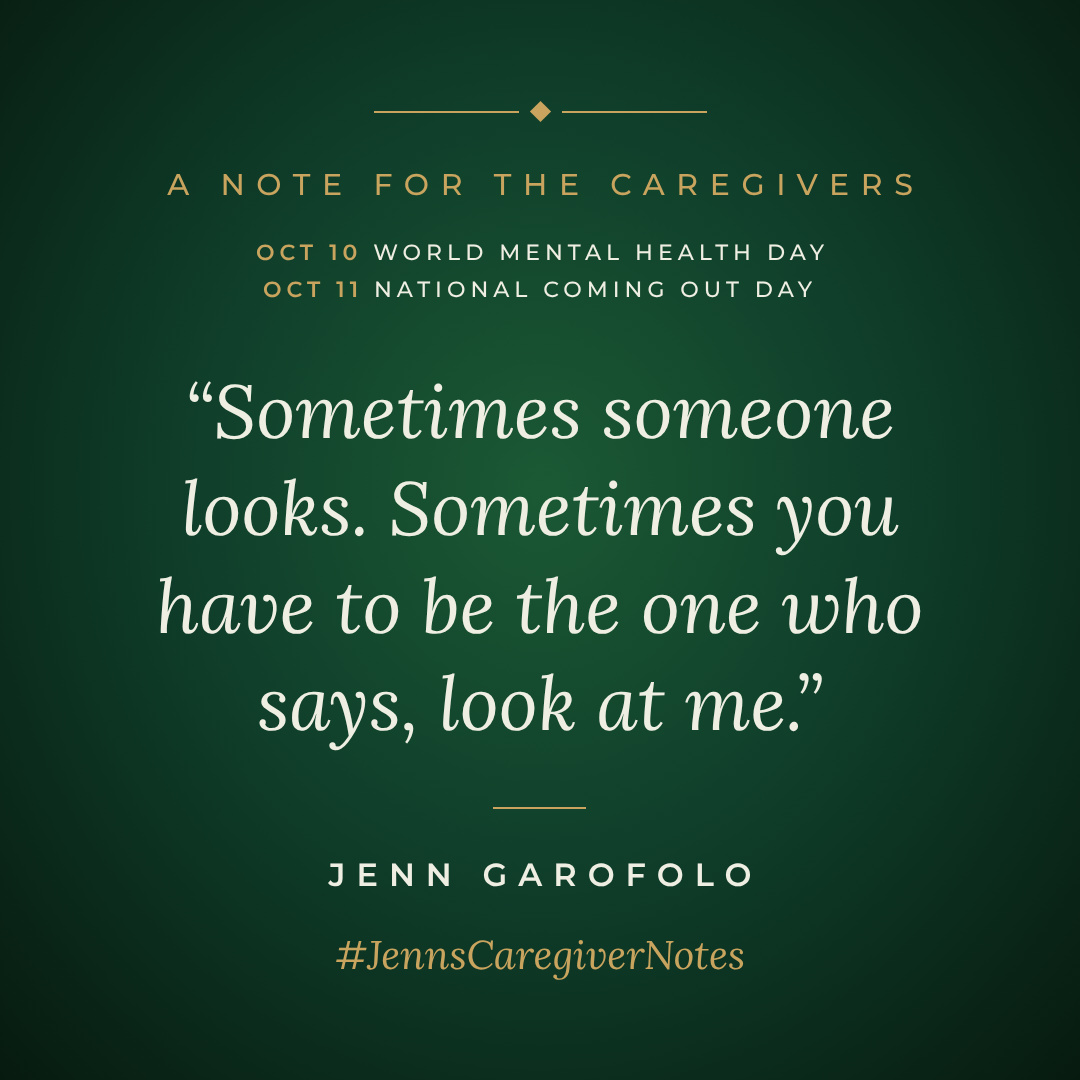
This Saturday is World Mental Health Day. Sunday is National Coming Out Day. The subtitle of my book includes the words "right to be seen," and both days are about exactly that.
Last week, an email came from my youngest's middle school. It was a notice about Mood Check, a mental health screening that has run in our district for eleven years. Seventh graders get suicide prevention education in class, then are invited to complete a screening for anxiety, depression, and suicidal thinking. Families are contacted and connected to resources. The letter was addressed to "Parent, Guardian, Caregiver."
I wish every school did this. Period.
I have a master's in public health, so I read it the way I was trained to. Public health talks about three levels of prevention. Primary prevention stops harm before it starts: seat belts, helmets, vaccines. Secondary prevention catches something early, so it does not get worse. Tertiary prevention is about quality of life once something is established, like someone whose cancer was found late.
Mood Check does the first two. The classroom education is primary. The screening is secondary.
Secondary is where our family was. I wish someone had flagged what we were facing, for any of our children. I am not sure I would have understood what it meant at the time, because I had not been through it yet. But having someone say it would have been really great. And I wish screening began even earlier than middle school.
On the podcast with Zach last week, I talked about the early signs everyone wrote off as the terrible twos, and how it took a decade to navigate the system for my child, even with my education and a career in biotech.
So what does a good partner to a caregiver look like?
Anyone who spends their days with children can be trained to notice, to understand why what they notice matters, and to share it with parents. It is not a teacher's job to care for everything in a student's life. But they see our children in places we are not, next to every other child their age. They see things we might not. The question is whether we are empowering teachers and staff to share what they see, early and proactively.
Not every family will respond the way we did. We went looking for help and kept looking. In the caregiver groups I belong to, parents tell me there is nowhere to go. They are lost trying to find anyone who will advocate for their child. And families often stay quiet when things go wrong, carrying guilt about what they did to cause it.
That is why being seen cannot depend only on someone else noticing. Sometimes you have to be the one who pushes to be seen and heard.
That starts with finding your voice. In the book I wrote, "Loud does not mean angry. It means you refuse to be silenced." It also means asking for help, which is not a failure. I wrote this too: "Questions are not an attack. They are an act of care."
And it means being okay with not being okay. Also from the book: "It is okay to break down. It is okay not to have all the answers. It is okay to be exhausted and scared and not the version of yourself you wish you were in a given moment."
If you are a parent, find out what your child's school does to look for mental health concerns, and ask. If you work with children, what you see matters, and sharing it is a kindness. And if you are the one who is struggling, you are allowed to say so out loud.
Sometimes someone looks. Sometimes you have to be the one who says, look at me. Both count.
💚 Jenn
Get new essays in your inbox.
New posts, book news, and updates, delivered to your inbox.