
Take the Pause
Two weeks ago, my conversation with Angela Lee went live on her podcast, This Is How She Does It. Angela's show is for working moms carrying the mental load, and her episode opens with a question I lived inside for years: what happens when you can solve any problem at work, and the one you can't solve is your child's mental health?
We covered a lot in 45 minutes. The years it took to get answers. The misdiagnoses. The sabbatical that gave me time with my family and the space to write this book. But the moment Angela pulled into a clip is the one I most want parents to hear:
"Just because they're doctors doesn't mean they know everything. That's the biggest call out I have for parents: don't be afraid to not take the recommendation of your practitioner, but to be able to take a pause and ask additional questions. And if you can't think of those questions fast enough, write them down, so that you can say, hey, listen, I need to think about this a little bit first. Can I send you an email, or a message through the patient portal, with the additional questions I have before we make a decision?"
I've spent my career in pharma and biotech. I know clinical evidence. I know how treatment recommendations get made. And in the beginning, in my own child's appointments, I still nodded and said okay.
I wrote about this in the book: "In the beginning, when you are overwhelmed and exhausted, and a specialist is sitting across from you with a plan, it is easier to just accept it. I did. More than once."
I had been raised to keep the peace and respect authority. Questioning a specialist felt disrespectful. That changed when a stimulant reaction sent my kindergartner into hallucinations, and the team suggested trying a different stimulant. I said no. "Not emotionally, not combatively. Just: I need more information before we introduce another medication capable of doing that. I had been a passenger until that moment. After that, I was in the driver's seat."
Taking the pause is not about distrusting doctors. It is about partnership. There is even a name for it in medicine: shared decision-making. You work with a clinician as a partner, not as a passive recipient of their recommendation. I knew that term from my professional life. I just had not been practicing it for my own child.
So here is what the pause can look like:
Ask them to walk you through their reasoning, not just their recommendation. Ask what alternatives exist. Ask what you would do differently if this doesn't work.
If your brain cannot form the questions in the room, that is not a failure. Write down what didn't get answered. Tell them you need to sleep on it. Send the follow-up through the portal the next day.
And pay attention to how they respond. A good provider will welcome your questions. A great one will teach you as they go. If someone acts like you're being difficult for asking, that tells you something too.
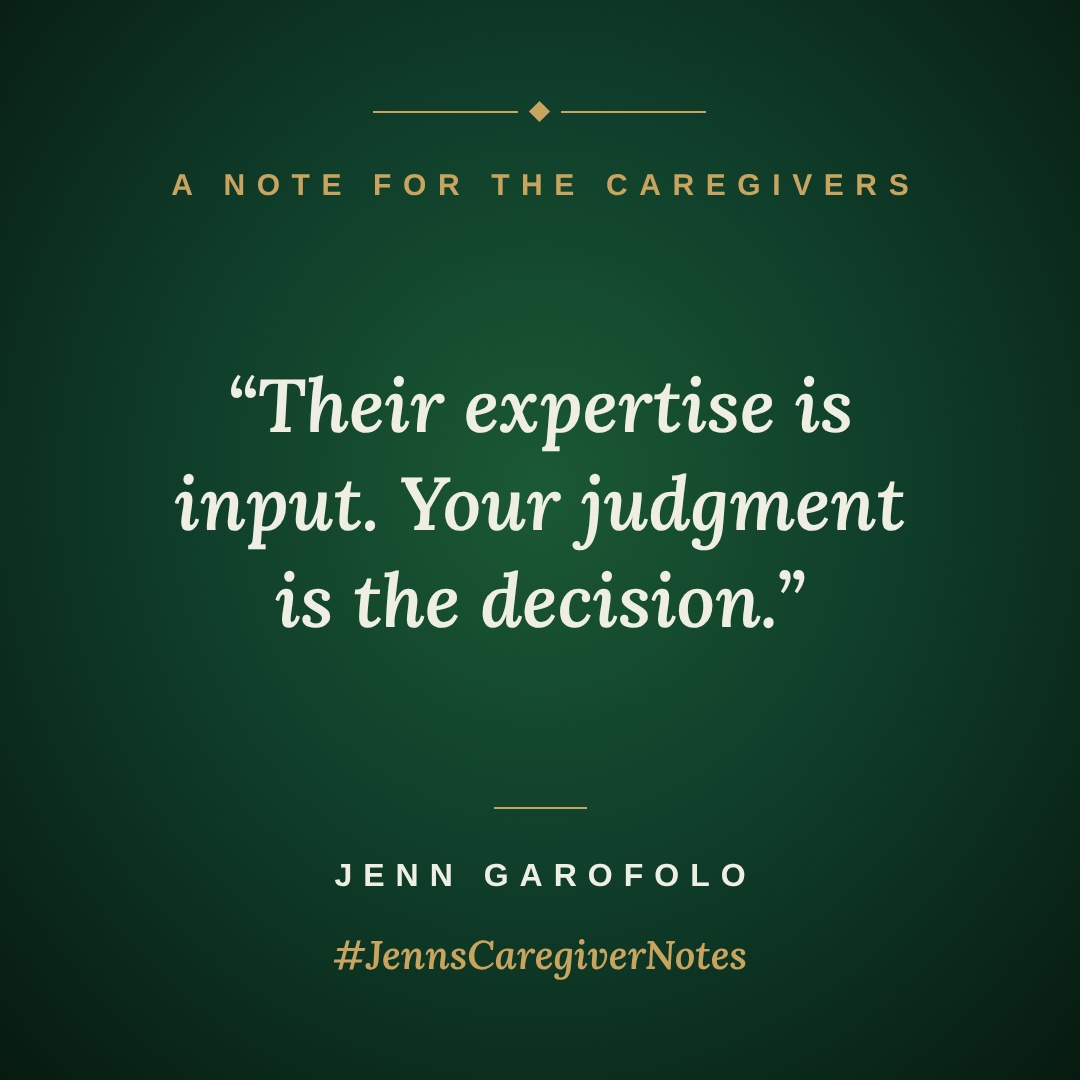
No one knows your child the way you do. Their expertise is input. Your judgment is the decision.
The full conversation with Angela is on Apple Podcasts and Spotify. We also talk about why work will always be there, and why finding your people can change everything.
💚 Jenn
Get new essays in your inbox.
New posts, book news, and updates, delivered to your inbox.