
What early readers see.
Something I did not expect when I shared the manuscript of Fighting for Their Lives with early readers:
How often someone would say back to me, in different words, the thing I most needed to hear.
When you spend years writing a book about a season of your life that almost broke you, you brace for the response. You wait for someone to say it was too much. Too raw. Too narrow. Too personal. You brace for the version of the reaction that confirms the fear you had every time you sat down to write.
What I got back, again and again, was different.
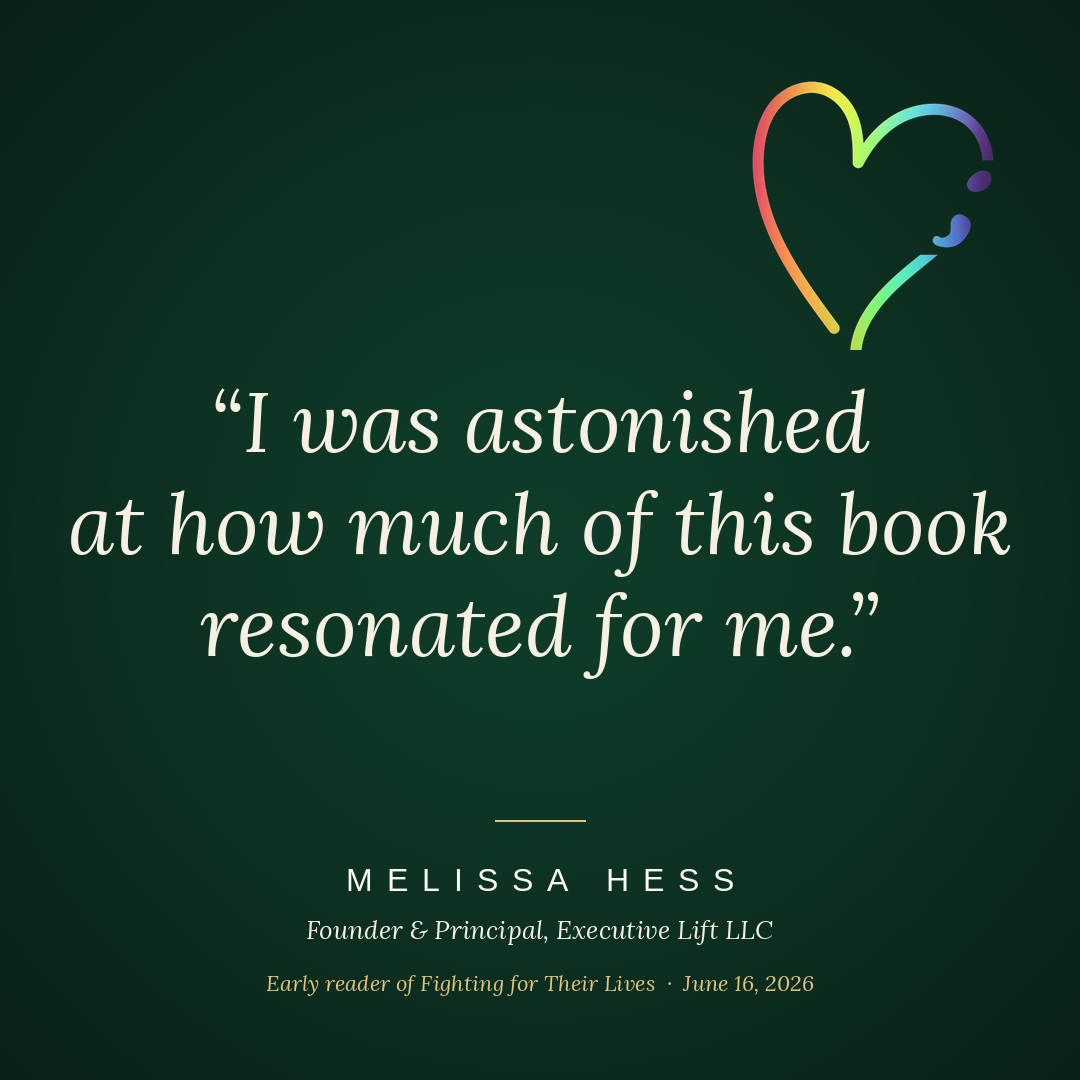
One early reader, Melissa Hess, sent me a note recently that I have been carrying with me. Melissa is the Founder and Principal of Executive Lift LLC, where she coaches senior leaders through transitions and transformations. She is a fellow caregiver, and someone whose professional voice I respect deeply. She read the book and wrote me this:
"I was astonished at how much of this book resonated for me, and I think professional women in particular might have a similar reaction. While I have never had trouble advocating for myself in professional settings, I struggle to do this in my personal life. Learning to flex my professional skills in my personal life is a great new framework I am excited to apply."
I read that, and I had to sit with it for a minute.
When I started writing this book, I had a clear picture of who it was for. Parents and caregivers of children with serious medical and psychiatric needs. Families navigating the gap between what their kid needs and what systems are built to provide. People who have been the loud one in the hallway, the steady one in the appointment, the awake one at three in the morning. That audience has not changed. They are still the people I wrote it for.
What I had not fully understood, until Melissa said it back to me, was that the book might also be for the professional woman who can advocate fiercely for her team at work and then go quiet at her own kitchen table. Who can build a case, hold a room, escalate to senior leadership without breaking a sweat, and then not know how to ask her own family for what she needs. Who has all the skills to advocate, just not the permission to use them at home.
That gap is enormous. And I had not realized, until she named it, that one of the things this book does is help name it.
That is what early readers do for you, if you are lucky.
They do not just confirm what you hoped you wrote. They show you what you actually wrote. They tell you who else is in the audience that you did not see when you started. They remind you that a personal story, told honestly, lands in places the writer could not have predicted.
I am grateful to every reader who has spent time with the manuscript so far. To the ones who flagged the small things and the ones who reflected back the large things. To Melissa, specifically, for her generosity and for naming something I could not yet name myself.
Fighting for Their Lives publishes June 16. If you have been waiting to act, this is the moment.
Jenn 💚
Get new essays in your inbox.
New posts, book news, and updates, delivered to your inbox.