
When my child taught me something.
For years, I thought my job as my oldest's mom was to teach him how to navigate the world.
I had been raised on a steady diet of what good parenting was supposed to look like. Provide. Prepare. Protect. Model the behaviors. Hold the boundaries. Have the answers. I took the job seriously. I read the books. I went to the appointments. I tried, with every version of myself I had, to be the kind of parent who could see the path forward when my child could not yet see it himself.
What I missed, for longer than I would like to admit, was that the lessons were flowing in the other direction too.
My oldest has been teaching me, in real time, for as long as I have known him. And only in the last few years have I been still enough to recognize it for what it is.
The first lesson was about softness.
The world had been sharp with my child in ways I did not always understand until later. Schools that did not know what to do with him. Adults who flinched at the version of himself he was working to claim. Systems that asked him to fit in spaces that were not built for him. Every time, every single time, he found a way to stay soft. Not weak. Not naive. Soft in the way that requires the most strength. He kept being kind to the kids who were not kind to him. He kept extending grace to teachers who had not yet earned it. He kept showing up at appointments and pulling himself together for one more conversation.
I watched that and I noticed something in myself. I had been getting harder. Faster, sharper, more efficient. I told myself this was advocacy. I told myself this was protection. Some of it was. But I was also losing something that he was holding onto. He was modeling the thing I had stopped knowing how to do.
The second lesson was about speaking up before you have all the language.
When my oldest first told me who he was, he did not have polished words for it. He had not read every article. He had not rehearsed it in the mirror. He was eleven years old. He told me anyway. He did not wait for the perfect sentence. He just said it.
I have spent most of my career being careful with language. Choosing words. Editing in real time. Calibrating before I open my mouth. Knowing when to speak and when to wait. There is a version of that skill that is genuinely valuable. There is another version of it that is just fear in a more sophisticated outfit.
He did not have that fear yet. Or maybe he had it, and he spoke anyway. Either way, he taught me that the right thing to say does not require the perfect arrangement of words. Sometimes it just requires that you say it.
The third lesson was about letting yourself be seen.
This is the one I am still learning.
For most of my life, being seen has felt unsafe in ways I could not always explain. I had learned, early, that being fully myself was a risk. I had built a version of me that worked for the rooms I had to walk into. It was not a lie. But it was not the whole truth either.
My oldest, for the last several years, has been choosing to be seen as his true self in rooms where that is not always easy. Not because it is easy. Because the alternative is unbearable. He has had to make that choice over and over again. With teachers. With doctors. With family members. With strangers. Each time costing him something. Each time worth it anyway.
I do not pretend that I have learned this lesson fully. I am still working on it. But I am working on it because of him.
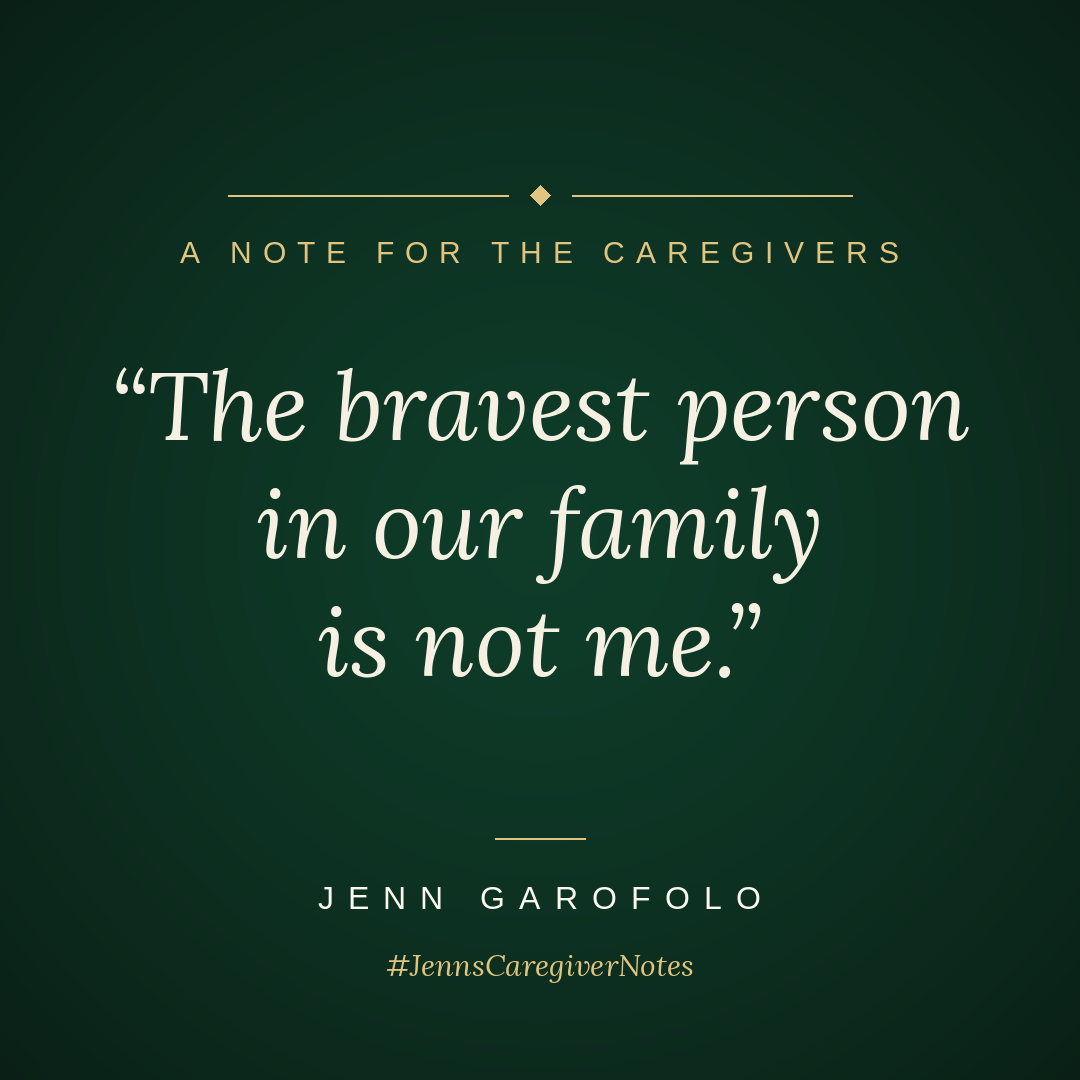
The bravest person in our family is not me. It never was.
I am the one who knows how to write it down. I am the one with the platform and the years of advocacy and the language to translate this story into a book that other parents might find at the right time. Those are real contributions. I do not minimize them.
But the courage at the center of this story belongs to my oldest. He is the one who lived it first, who keeps living it now, who has been showing the rest of us what it looks like to stay soft, speak up, and be seen.
If you are a parent of a child like mine, watch them closely. Not for the deficits you are trained to track. Watch them for the moments when they are quietly modeling something you have forgotten how to do. The lessons are flowing in both directions. Maybe they always were.
Jenn 💚
Get new essays in your inbox.
New posts, book news, and updates, delivered to your inbox.