
Accountability and Accommodation
Getting support is not the opposite of showing up.
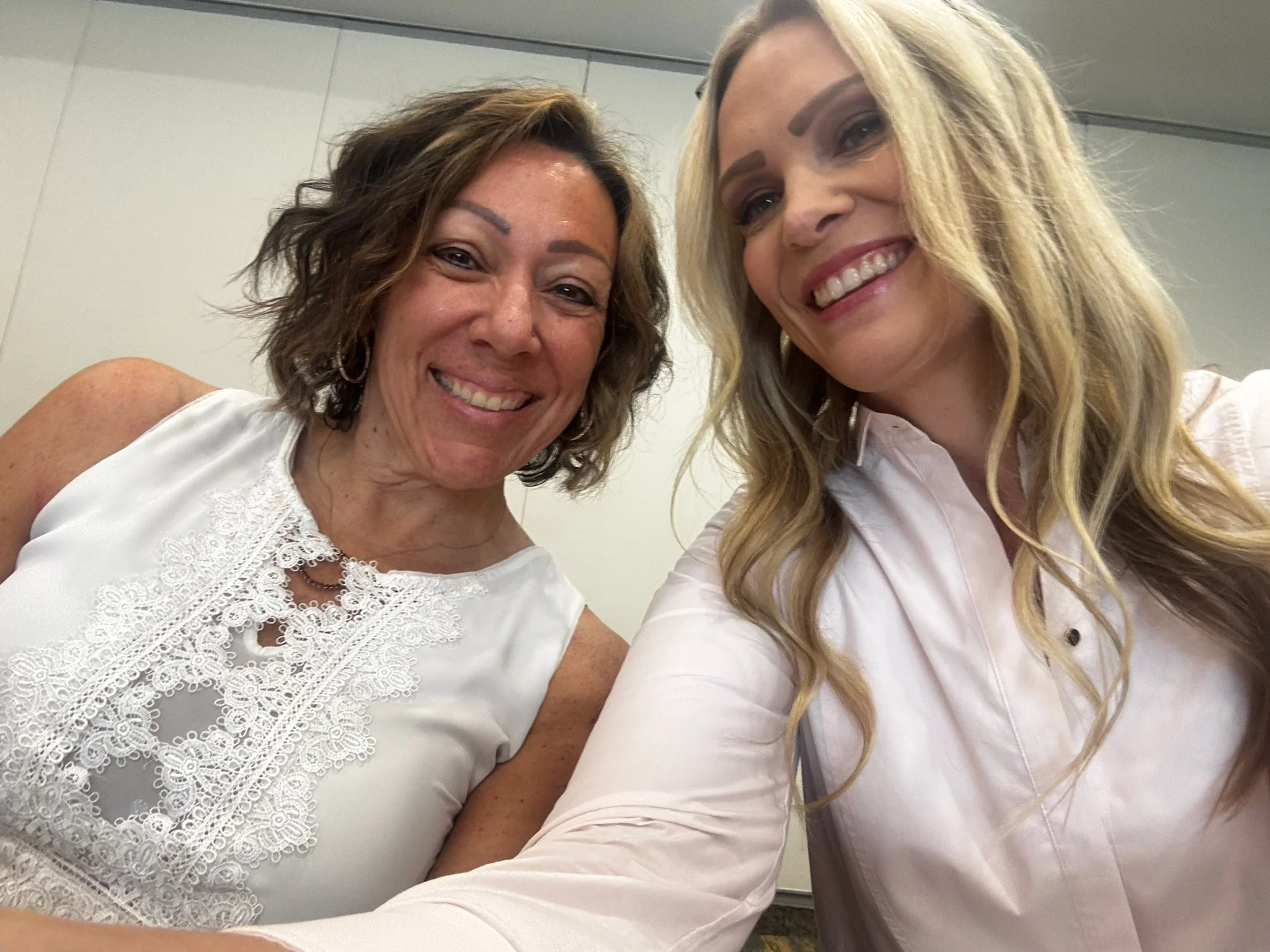
Last week I sat in a room full of HR professionals in Devens, Massachusetts, watching one of the country's leading ADA and disability experts do what she does.
Her name is Rachel Shaw. She is the President of Shaw HR Consulting, a recognized authority on workplace disability law and the interactive accommodation process, and, as it happens, someone I have known since she was a freshman at Brown and I was a senior on the same basketball team. We lost touch the way people do. Life moved fast in different directions. Then, a few weeks ago, the universe brought us back into the same orbit.
Watching her work a room is something.
The session was about one of the hardest intersections HR professionals navigate: what happens when mental health, performance concerns, and disability protections all arrive at the same moment. When an employee says, in some form, that what is happening at work is connected to something medical. When the system has to decide how to respond.
Rachel spent the morning walking through the legal framework, the process, the data, and the human reality underneath all of it. She talked about why psychological disabilities show up differently than physical ones. Why people hide them until they are already in crisis. Why the stigma is not just a personal burden but a structural one, embedded in how workplaces respond when they finally do show up.
One line stayed with me long after I left the room.
"Accountability and accommodation are not mutually exclusive."
She said it in the context of employers and employees. But I kept turning it over in my hands and applying it somewhere else entirely.
Because the same thing is true for caregivers.
We carry a belief, many of us, that asking for support means we are somehow less committed to the people we are caring for. That taking time for our own mental health is time stolen from the people who need us. That admitting the weight is too heavy means we are not strong enough to carry it.
None of that is true. But it feels true, especially when you are in the middle of it and there is no obvious moment to stop and say: I need something too.
I told myself for years that I was managing. And in a narrow sense, I was. I kept going. I kept showing up. I disclosed enough at work that people knew something was hard at home. But I managed the message so carefully that the weight never fully landed anywhere. I performed capability so consistently that no one around me knew what to offer. And I never asked for what I actually needed.
The irony of sitting in Rachel's room last week was not lost on me. Here was a nationally recognized expert explaining, with precision and warmth, exactly why people do what I did. Why the silence is not weakness or dishonesty. Why it is the predictable result of systems and cultures that have not yet learned how to hold psychological complexity without flinching.
And why it does not have to stay that way.
Accountability and accommodation are not mutually exclusive. Showing up and asking for support are not opposites. Getting help is not the same as giving up.
You can be fully present for the people who need you and still need something yourself. In fact, for most of us, one depends on the other.
That is what I know now. It took longer than I would like to admit to get here.
If you are somewhere in the middle of that learning, I hope this lands for you today.
This is part of the Notes for the Caregivers series, published throughout May for Mental Health Awareness Month.
Fighting for Their Lives publishes June 16.
Jenn 💚
Get new essays in your inbox.
New posts, book news, and updates, delivered to your inbox.